 Skip to content

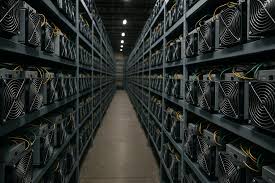
Image 1 — Header (replaces Blog3Header.jpg) The current one is a stock-feeling data center photo. Replace it with something more Lazy Miners. A split-screen illustration: left side shows a stressed person at home — sweating, ears covered, surrounded by a loud overheating miner, cables everywhere, utility bill on the table. Right side shows the same person totally relaxed, feet up, phone in hand showing a mining dashboard, while their miner sits neatly in a clean industrial facility. The contrast tells the whole story before anyone reads a word.
If you have ever run a crypto miner at home, you know the drill. Noise like a jet engine, heat like a sauna, and a power bill that makes your eyes water. A crypto mining hosting facility is the solution, and the easiest way to think of one is as a babysitter for your miner.
Instead of dealing with every little detail yourself, you send your miner to a professional environment where everything is handled: power, cooling, security, and maintenance. You still own the hardware. You still collect the rewards. You just do not have to live with the chaos.
Estimated reading time: 9 minutes
Think of it exactly like leaving your kid with a trusted babysitter:
The facility does the hard work. You do the easy part.
Image 2 — Babysitter section (replaces Blog3Image1.png) Currently unknown what this shows. Lean into the babysitter analogy visually. Shiba mascot dressed as a babysitter — maybe a little apron, holding a clipboard — standing next to a large Antminer. Clean illustrated style. Funny, memorable, and completely on-brand.
Running an industrial ASIC miner at home sounds appealing until you actually do it. Here is why serious miners move to hosting:

Image 3 (new) — Cost Comparison Graphic Goes in the “Why Hosting Beats Mining at Home” section, right before the subsections start. Two-column layout showing the contrast side by side. Something like:
| Home Mining | Hosting Facility |
|---|---|
| $0.12–0.18/kWh | $0.05–0.08/kWh |
| Manual reboots | 24/7 monitoring |
| Noise + heat | Industrial cooling |
| You fix it | Staff fixes it |
This is the biggest one. Hosting facilities negotiate industrial power rates that residential customers simply cannot access. In Canada, residential electricity typically runs between $0.12 and $0.18 per kWh depending on your province, according to Natural Resources Canada. Industrial facilities routinely operate at $0.05 to $0.08 per kWh. On a machine drawing 3,500 watts continuously, that difference adds up to hundreds of dollars per month in savings — money that goes directly to your bottom line instead of the power company.
Modern ASIC miners generate serious heat. An Antminer S21 running at full load produces enough heat to noticeably warm a room and requires a continuous stream of cool intake air to stay within safe operating temperature. Hosting facilities are purpose-built for this. Industrial fans, ducted airflow, and in premium facilities, immersion or hydro cooling keep machines running at optimal temperature 24 hours a day. Your living room cannot compete.
A single large ASIC miner runs at roughly 75 decibels — about as loud as a vacuum cleaner, running continuously. Multiple machines are genuinely unbearable in a home environment. Hosting removes that problem entirely. Your miner can run at full speed in an industrial building where noise is irrelevant, while your home stays quiet.
Miners go offline. Firmware needs updating. Hash boards fail. Control boards throw errors. At home, that means you are the on-call technician at 3am. At a hosting facility, that is someone else’s job. Most reputable facilities offer monitoring dashboards so you can check your miner’s status remotely, but the actual fixes happen without you.
Most hosting facilities accept payment in crypto or cash. That means the rewards your miner generates can directly cover its own hosting costs — a genuinely self-sustaining setup when the numbers work out.
Not all hosting facilities are equal. Before you ship your hardware, here is what actually matters:
Option C — The Report Card A literal report card graphic for a hypothetical hosting facility. Grades for each criteria: Power Rate A+, Uptime A, Security B+, Transparency A, Contract Terms B. Looks like an actual school report card but for your hosting provider. Very shareable, very different from anything else in the crypto mining space.
The electricity rate is the single most important number. Ask for it upfront and in writing. Anything under $0.07 USD per kWh is competitive. Anything above $0.10 is worth questioning unless the facility offers exceptional uptime and services to justify it.
A miner that is offline is not earning. Ask about the facility’s uptime track record and what redundancies are in place — backup power, generator capacity, and network failover. A good facility should be able to answer these questions without hesitation.
Your hardware is a real physical asset worth thousands of dollars. Ask about on-site security, surveillance, access controls, and insurance. If a facility cannot clearly answer how they protect hardware, that is a red flag.
You should be able to see your miner’s hashrate and status remotely at any time. Most reputable facilities provide access to a monitoring dashboard. If a provider cannot offer this, you are essentially flying blind on your own investment.
Understand the notice period required to retrieve your hardware, how billing works if your miner goes offline for maintenance, and whether there are setup or onboarding fees beyond the monthly power rate.
Hosting is not the right move for every miner. Here is the honest breakdown:
Hosting makes sense if:
Home mining may still work if:
Canada is one of the best countries in the world for crypto mining hosting. Several provinces offer some of the lowest industrial power rates globally, particularly in Quebec, Manitoba, and British Columbia where hydroelectric power keeps costs down. Canadian facilities also benefit from natural cold-air cooling for much of the year, reducing cooling overhead significantly.
For Canadian miners specifically, hosting also sidesteps the ongoing residential power disputes that have led some provinces to restrict or surcharge high-consumption home users. Industrial contracts at dedicated facilities operate under different regulatory frameworks and are far more stable long-term.
At Lazy Miners, we work with Canadian hosting partners who offer competitive rates and straightforward terms for miners of all sizes. Whether you are placing one machine or building toward a larger deployment, our hosting service is designed to make it simple.
If you love the idea of mining but hate the noise, heat, and stress that comes with running industrial hardware at home, hosting is the lazy solution. It is a genuinely hands-off investment: you own the hardware, you collect the rewards, and the facility handles the rest.
The math works out simply: if the savings on electricity plus the cost of not dealing with maintenance and noise is worth more to you than the monthly hosting fee, hosting is the right call. For most people running modern industrial ASICs, it almost always is.
Your miner should work hard. You should not have to.
Image 4 (new) — The Lazy Miners Take closing image This is the one from the original brief that was sitting in the post as plain text. Shiba mascot in a lounge chair, beer in hand, looking relaxed. In the background, an ASIC miner humming away inside a clean facility. Big bold signs on the wall: NO NOISE / NO HEAT / NO STRESS. Lazy Miners sticker illustration style. Very shareable, very on-brand.
Ready to get started? Learn more about Lazy Miners hosting, browse our selection of new miners suited for hosting deployments, or read our post on network difficulty and block halving to understand what drives long-term mining profitability. And if you are still figuring out what kind of miner is right for your situation, our FAQ is a good place to start.


